Featured


Little Known Questions About How to Not Fall Into Additional Debt Cycles After Debt Relief.
Table of Contents
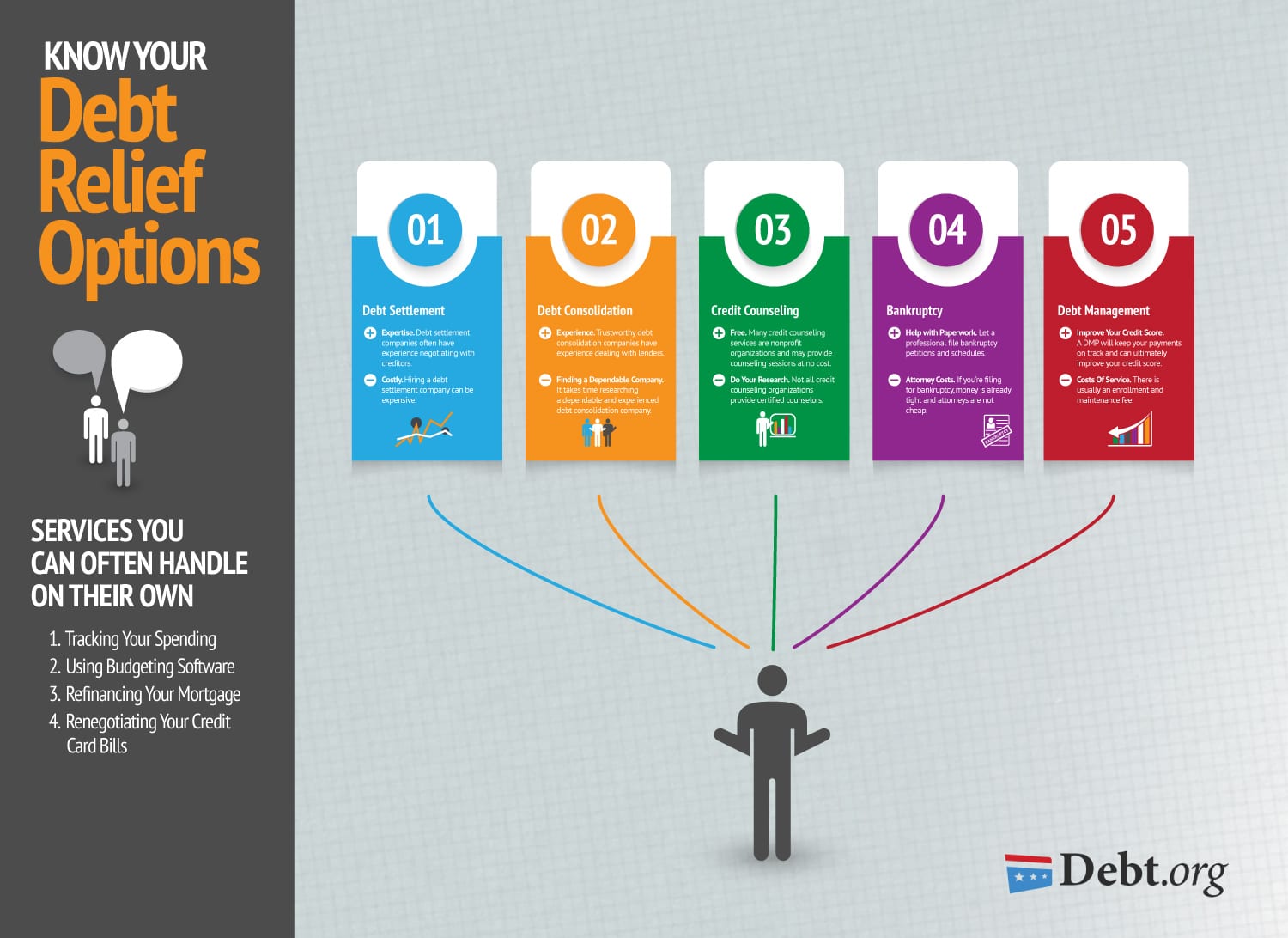
That maximizes money in the brief term, and you may have 3 to 4 years to conserve towards the negotiation amount. Really unsafe to credit rating, primarily as a result of missed out on repayments and an unfavorable "resolved" mark that might stay on your credit history record for approximately 7 yearsMay be just option if various other alternatives (financial obligation consolidation, equilibrium transfer credit scores cards, financial obligation forgiveness) aren't possibleTypically requires a fee to the 3rd party, which might balance out some or every one of the financial savings from debt settlementMay assist you avoid insolvency if you have actually missed out on several paymentsNot all financial institutions function with financial obligation settlement firms Financial obligation forgiveness may be appropriate for you if you are experiencing a financial hardship that makes it nearly difficult to pay for your financial obligation equilibriums.
With a DMP, you make one month-to-month repayment to the credit therapy firm. Those funds are then dispersed to creditors of your unsafe financial obligations, such as bank card and installment car loans. The firm deals with your lenders to lower rate of interest or waive costs, but some financial institutions may reject such concessions.
It can aid you pay down financial obligation if you're able to safeguard a financing rate that's lower than the average rate of the accounts you're consolidating. You should abstain from racking up financial obligation on those newly removed accounts or your debt might grow also greater.
These cards often use a 0% interest initial period of as much as 21 months. That offers you a lot of time to get rid of or dramatically decrease your balance while making interest-free repayments. For some individuals facing overwhelming financial obligation, personal bankruptcy may be the only method to quit collection process and legitimately settle their debts.
Regional Initiatives for Debt Relief for Beginners
You may need it if your financial institution or a debt collection agency ever tries to accumulate on the financial debt in the future. The letter can prove you do not owe what the collection company's records show. Yes, in most cases, the internal revenue service thinks about forgiven financial debt as gross income. When a lending institution forgives $600 or even more, they are called for to send you Form 1099-C.
Financial obligation forgiveness or settlement generally harms your credit history. Anytime you settle a financial debt for less than you owe, it may look like "resolved" on your debt report and impact your credit history for seven years from the date of negotiation. Your debt can likewise drop considerably in the months resulting in the mercy if you drop behind on payments.
The Greatest Guide To Understanding Different How Specialty Counselors Help Clients Facing Legal Separation or Child Support Changes Offered Now
This circumstance usually results from underreporting income, not submitting returns on time, or inconsistencies found throughout an IRS audit. The effects of building up tax financial debt are serious and can include tax liens, which provide the Internal revenue service a legal case to your building as protection for the financial debt.
Wages and Bank Accounts IRS can impose (take) salaries and financial institution accounts to satisfy the financial obligation. Property Seizure In extreme instances, the Internal revenue service can confiscate and sell residential property to cover the financial debt.
Depression, stress and anxiety, and various other psychological wellness problems. Social Stigma Encountering legal activity from the IRS can carry social preconception. Damages to reputation and connections. Work Opportunities A bad credit rating due to tax debt can limit work opportunities. Problem finding or maintaining a job. Government Advantages Tax obligation debt might impact eligibility for government advantages, such as Social Protection and Medicaid.
Technology in Debt Counseling - The Facts
The OIC takes into consideration a number of elements, including the taxpayer's income, costs, possession equity, and ability to pay. Effectively working out an OIC can be intricate, needing a complete understanding of the IRS's guidelines and a strong argument for why your offer lines up with your capability to pay. It is essential to keep in mind that not all applications are approved, and the procedure needs comprehensive monetary disclosure.
The IRS analyzes your overall financial situation, including your revenue, costs, possession equity, and ability to pay. You have to also be current with all declaring and settlement requirements and not be in an open bankruptcy case. The internal revenue service also considers your conformity background, assessing whether you have a document of prompt filing and paying taxes in previous years.
An Unbiased View of Widespread False Beliefs About How Specialty Counselors Help Clients Facing Legal Separation or Child Support Changes
The application process for an Offer in Compromise includes numerous in-depth actions. You should finish and submit IRS Kind 656, the Deal in Concession application, and Form 433-A (OIC), a collection details declaration for individuals. These forms call for comprehensive financial information, consisting of details about your income, financial obligations, expenditures, and possessions.
Back tax obligations, which are overdue tax obligations from previous years, can significantly increase your overall internal revenue service financial obligation if not dealt with quickly. This financial obligation can build up rate of interest and late payment fines, making the original amount owed a lot bigger over time. Failure to repay taxes can result in the internal revenue service taking enforcement activities, such as providing a tax lien or levy versus your property.
It is necessary to address back tax obligations asap, either by paying the sum total owed or by preparing a layaway plan with the internal revenue service. By taking aggressive actions, you can stay clear of the buildup of added interest and penalties, and protect against more hostile collection activities by the IRS.
One usual reason is the idea that the taxpayer can pay the total either as a lump sum or with a settlement strategy. The IRS likewise thinks about the taxpayer's revenue, expenditures, property equity, and future earning capacity. If these factors show that the taxpayer can manage to pay greater than the provided quantity, the internal revenue service is most likely to reject the deal.
All about Frequent False Beliefs About How Specialty Counselors Help Clients Facing Legal Separation or Child Support Changes
It is essential to give exact and total details in your application and to speak with a tax expert to boost the possibilities of approval. Managing internal revenue service debt can be intricate and overwhelming. Tax obligation professionals, such as CPAs, tax obligation lawyers, or enlisted representatives, can give important help. They have the proficiency to browse the intricacies of tax obligation regulation and internal revenue service treatments.

Table of Contents
Latest Posts
The Single Strategy To Use For Methods APFSC Guarantees Regulatory Compliance
An Unbiased View of Free Informational Dealing with Property Tax Escrow Shortages: When to Call a Housing Counselor Workshops That Help Individuals

The Safeguarding Yourself from Bankruptcy Counseling Fraud PDFs
More
Latest Posts
The Single Strategy To Use For Methods APFSC Guarantees Regulatory Compliance
The Safeguarding Yourself from Bankruptcy Counseling Fraud PDFs